
 Release time: 2026-03-10
Advanced manufacturing is an important pillar of the real economy.
“…During the 15th Five-Year Plan period, we will accelerate the development of advanced manufacturing,” “accelerate the building of a modern industrial system with advanced manufacturing as the backbone,” and “strive to enhance advanced manufacturing capabilities.” On August 26, at the series of themed press conferences on “Getting Off to a Good Start for the 15th Five-Year Plan” held by the State Council Information Office, “advanced manufacturing” became a high-frequency term, sending a clear and powerful signal.
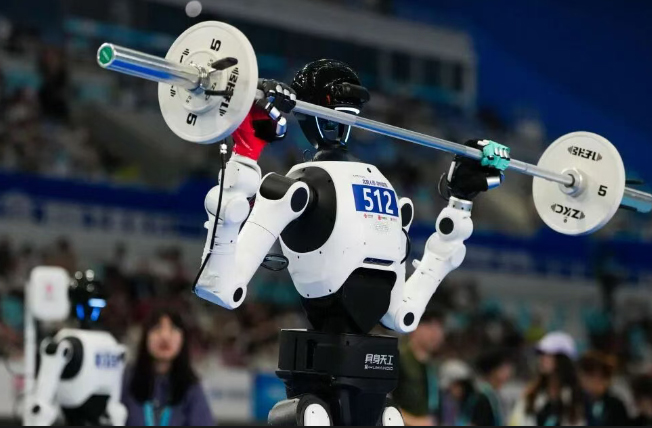
“We will focus on optimizing the industrial structure, making coordinated progress in upgrading and renovating traditional industries, nurturing and strengthening emerging industries, and making forward-looking arrangements for future industries, while maintaining and developing a complete industrial system,” said Xin Guobin, Vice Minister of Industry and Information Technology.
Promoting the “renovation” of traditional industries: deepening pilot programs for the new-type technological transformation of manufacturing in cities, strengthening technological innovation, equipment renewal and model innovation, and advancing the intelligent, green and integrated development of traditional industries.
Accelerating the “lead” of emerging industries: speeding up the development of emerging pillar industries such as integrated circuits, aerospace, biomedicine, the low-altitude economy, new-type energy storage and intelligent robots.
Supporting future industries to “take root”: promoting quantum technology, biomanufacturing, hydrogen energy and nuclear fusion energy, brain-computer interfaces, embodied intelligence and the sixth-generation mobile communications (6G) to become new economic growth points…
The continuous optimization of the industrial structure is building a solid foundation and accumulating momentum for advanced manufacturing.
A detail at the press conference was striking: foldable-screen phones can be folded repeatedly, thanks to domestically produced ultra-thin flexible glass that has achieved 30micrometer mass production — a thickness only about one-quarter of that of a sheet of A4 paper.
The cycle of “one generation of materials, one generation of equipment, one generation of industries” reflects the deep integration of scientific and technological innovation with industrial innovation.
Strengthening original innovation and tackling key core technologies, building and making good use of platforms such as national manufacturing innovation centers and manufacturing pilot-test platforms, and channeling innovation resources toward enterprises… A series of measures at the press conference will promote the seamless connection between the innovation chain and the industrial chain, continuously enhancing the overall effectiveness of the manufacturing innovation system.
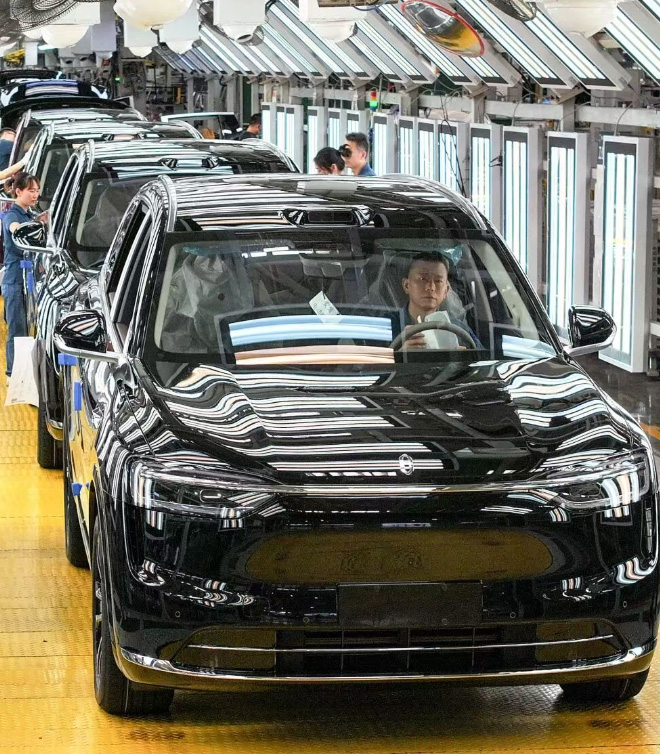
Output of new-energy vehicles, power batteries and key materials accounts for more than 70% of the global total; the annual output of industrial robots has risen to 773,000 units… These “business cards” of Made in China mark the solid confidence underpinning advanced manufacturing capabilities.
At the press conference, a package of measures was dedicated to boosting manufacturing capabilities —
Integration will deepen further: advancing the “AI + Manufacturing” special initiative; promoting the large-scale application of 5G, the industrial internet and other technologies in manufacturing and other fields; promoting the deep integration of advanced manufacturing with modern service industries, and accelerating the cultivation of new models and new business forms such as platform-based design and customized production.
The green and low-carbon pathway will become clearer: making coordinated efforts to optimize the industrial and energy consumption structures, accelerating electrification transformation and the application of green energy, and implementing a digital identity card management system for power batteries. It is reported that during the 15th Five-Year Plan period, 500 zero-carbon factories will be cultivated and built; by 2030, the comprehensive utilization of used power batteries will strive to reach more than one million tons per year.
“We should be the ‘family member’ of enterprises, implement the key tasks of deepening reform, strengthen planning guidance, standards and norms, and policy support, deepen highlevel opening-up and cooperation, and foster a sound industrial ecosystem,” said Xin Guobin.
The Plan for Promoting the Development of Small and Medium-sized Enterprises during the 15th Five-Year Plan period will be officially released soon, making systematic arrangements around cultivating high-quality enterprises, deepening digital and intelligent empowerment, and strengthening the supply of production factors, so as to promote the highquality development of SMEs.
In addition, the Ministry of Industry and Information Technology will focus on improving industrial governance capabilities, improving the legal and regulatory system, and improving the capacity monitoring and early-warning mechanism, while strengthening planning guidance, capacity regulation, price governance and industry self-discipline, comprehensively rectifying “involution-style” competition, and building a market-oriented, law-based and internationalized business environment.
The goals are clear and the path is set. Chinese manufacturing is racing into the new fiveyear period with a posture of striving for “leadership.”
© Copyright 2026 Foshan Jinjun Metal Materials Co., Ltd
All Rights reserved.





© Copyright 2026 Foshan Jinjun Metal Materials Co., Ltd All Rights reserved.
Technical Support: CEALL